

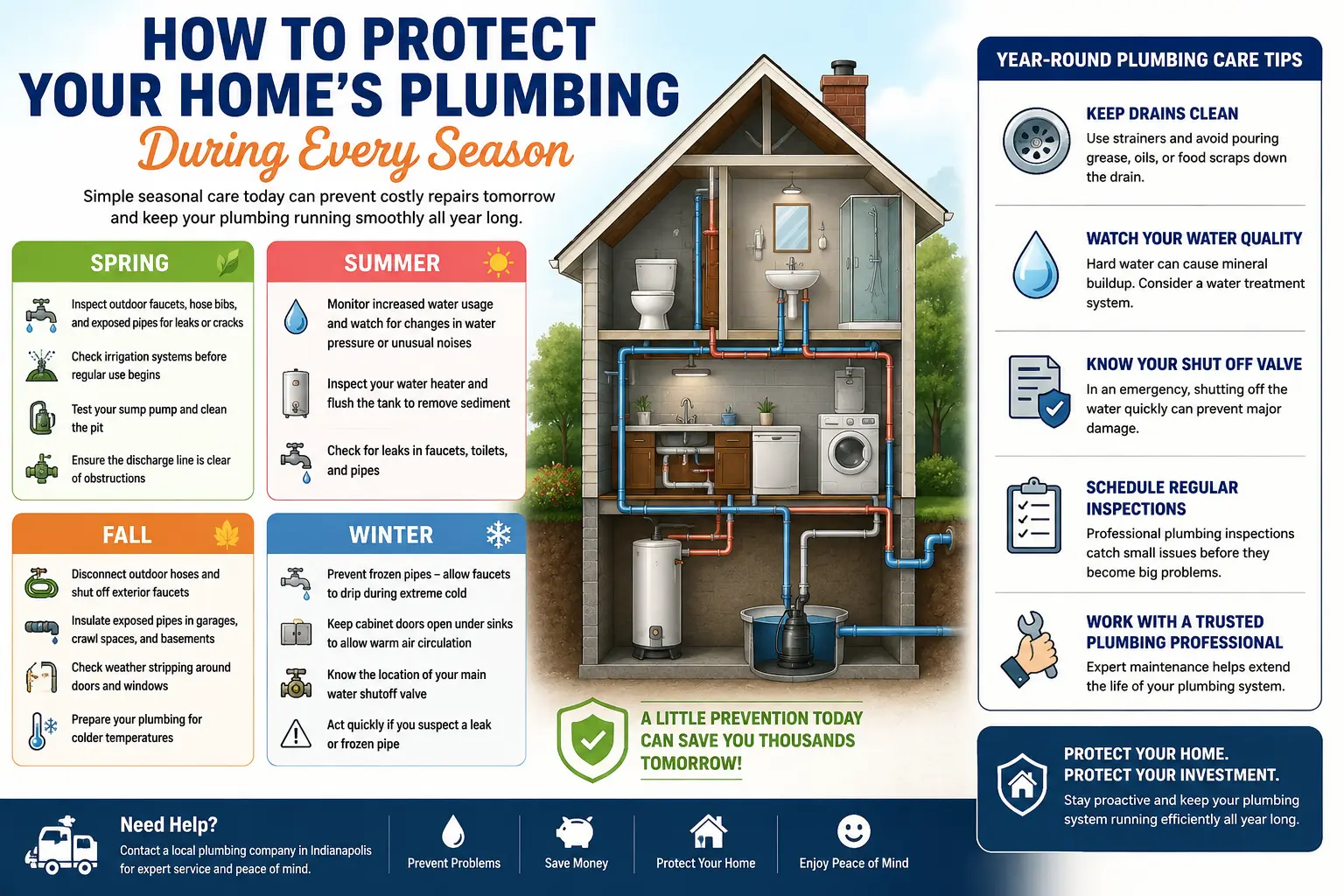
Your home’s plumbing system works around the clock, delivering clean water and safely removing wastewater every day. Because it operates behind walls, beneath floors, and underground, it’s easy to forget about it until a problem develops. Unfortunately, plumbing emergencies often happen unexpectedly and can result in costly repairs, water damage, and major inconvenience.
The good news is that many plumbing problems can be prevented by taking simple steps throughout the year. Understanding how seasonal weather affects your plumbing and performing routine maintenance can help keep your system running efficiently while avoiding expensive surprises.
Spring is an excellent time to inspect your plumbing after winter has passed. Freezing temperatures can weaken pipes, damage outdoor faucets, and create small leaks that may not become noticeable until warmer weather arrives. Homeowners should inspect hose bibs, irrigation systems, and exposed piping for cracks or leaks before regular outdoor water use begins.
Spring is also a great opportunity to check your sump pump. Heavy rains can quickly overwhelm a basement if a sump pump fails during a storm. Testing the pump, cleaning the pit, and ensuring the discharge line is free from obstructions helps prepare your home for wet weather. A functioning sump pump can prevent thousands of dollars in water damage.
As summer arrives, many families increase their water usage. Children playing outside, lawn irrigation, gardening, filling swimming pools, and hosting guests all place additional demand on the plumbing system. During periods of higher usage, it’s important to pay attention to changes in water pressure or unusual noises from your plumbing, as these may indicate developing issues.
Summer is also an ideal time to inspect your water heater. Although it may not be working as hard during warmer months, sediment continues to accumulate inside the tank throughout the year. Flushing the tank periodically removes mineral buildup that reduces efficiency and shortens the life of the appliance. This simple maintenance task helps improve performance while reducing energy consumption.
Fall is the season to begin preparing your plumbing for colder temperatures. Outdoor hoses should be disconnected before freezing weather arrives to prevent water from expanding inside connected pipes. Exterior faucets should be shut off when possible, and exposed pipes located in garages, crawl spaces, or unfinished basements should be insulated to reduce the risk of freezing.
Inside the home, it’s also wise to inspect weather stripping around doors and windows that may expose plumbing to cold drafts. Small improvements in insulation can make a significant difference during extreme winter temperatures.
Winter presents some of the greatest challenges for residential plumbing systems. Frozen pipes remain one of the most common causes of severe water damage. When water freezes inside a pipe, it expands and creates pressure that may cause the pipe to crack or burst. Once temperatures rise, the damaged pipe can release hundreds of gallons of water into the home.
Allowing faucets connected to vulnerable pipes to drip slightly during extremely cold weather can help reduce pressure within the system. Keeping cabinet doors beneath kitchen and bathroom sinks open also allows warm indoor air to circulate around plumbing located along exterior walls.
Drain care should remain a priority throughout the year. Kitchen sinks are particularly susceptible to clogs caused by grease, oils, coffee grounds, and food scraps. While these materials may appear harmless when washed down the drain, they gradually accumulate inside pipes and restrict water flow. Using sink strainers and disposing of grease in the trash rather than down the drain helps keep kitchen plumbing operating efficiently.
Bathroom drains also require routine attention. Hair, soap residue, toothpaste, and personal care products can slowly create stubborn blockages that eventually lead to slow drainage or backups. Installing inexpensive drain screens and cleaning them regularly can dramatically reduce future plumbing problems.
Water quality is another important consideration. Homes with hard water often experience mineral buildup inside pipes, faucets, showerheads, and water-using appliances. Over time, calcium and magnesium deposits reduce water flow, decrease appliance efficiency, and increase maintenance costs. Water treatment systems can help minimize scale buildup while protecting your home’s plumbing investment.
Knowing where your main water shutoff valve is located is another simple yet valuable preparation. In the event of a burst pipe or major leak, quickly shutting off the water supply can greatly reduce water damage while waiting for repairs. Every homeowner should know the location of this valve before an emergency occurs.
While homeowners can perform many basic maintenance tasks themselves, scheduling periodic inspections with a local plumbing company in Indianapolis provides additional peace of mind. Experienced plumbers can identify hidden leaks, inspect aging pipes, evaluate water heaters, and recommend preventive repairs before small issues become major problems. Professional maintenance not only helps extend the life of your plumbing system but can also reduce the likelihood of unexpected emergencies.
A well-maintained plumbing system protects both your home and your investment. By paying attention to seasonal maintenance, practicing good plumbing habits, and addressing minor concerns before they escalate, homeowners can enjoy reliable plumbing performance throughout the year. Preventive care today can save considerable time, money, and stress in the future while helping your entire plumbing system operate at its best.
Related posts:
 How to Tighten Kitchen Faucet Nut Under Sink
 How to Fix a Leaky Delta Shower Faucet
 Faucet Leak: How to Fix a Dripping Faucet
 How Dirty Furnaces Affect Allergies and Breathing
 Top Signs You Need a Plumbing Service to Avoid House Water Inlet Valve Troubles!
 Why Hiring a Local Plumbing Expert is Crucial for Drain Clogging in Commercial Eateries?
 A Guide to Swimming Pool Heat Pump Installation